Semaglutide
A GLP-1 receptor agonist peptide drug approved for type 2 diabetes and chronic weight management.
A GLP-1 receptor agonist peptide drug approved for type 2 diabetes and chronic weight management.

Semaglutide
GLP-1 medicines and gut peptides have distinct names—brand names, generics, and research codes.
Reference values from published sources—not prescribing or dosing advice. Cosmetic INCI peptides do not belong here; injectable and prescription contexts only.
Source: PMC semaglutide PK
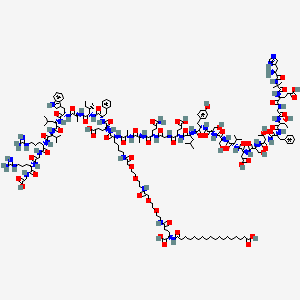 ✨ real molecule sketch
This peptide is a short chain of about 4 amino acids—think of it as a tiny protein necklace on your label.
INCI: Semaglutide · ~4 amino acids in our simplified view
Sourced from OpenFDA drug labels (public domain). Not medical advice.
Brand names: OZEMPIC, RYBELSUS, Ozempic, WEGOVY
Manufacturer: Novo Nordisk Pharmaceutical Industries, LP
1 INDICATIONS AND USAGE RYBELSUS and OZEMPIC tablets are indicated: • as an adjunct to diet and exercise to improve glycemic control in adults with type 2 diabetes mellitus. • to reduce the risk of major adverse cardiovascular (CV) events (CV death, non-fatal myocardial infarction or non-fatal stroke) in adults with type 2 diabetes mellitus who are at high risk for these events. RYBELSUS and OZEMPIC tablets are glucagon-like peptide-1 (GLP-1) receptor agonists indicated: • as an adjunct to diet and exercise to improve glycemic control in adults with type 2 diabetes mellitus. ( 1 ) • to…
WARNING: RISK OF THYROID C-CELL TUMORS • In rodents, semaglutide causes dose-dependent and treatment-duration-dependent thyroid C-cell tumors at clinically relevant exposures. It is unknown whether RYBELSUS and OZEMPIC tablets cause thyroid C-cell tumors, including medullary thyroid carcinoma (MTC), in humans as human relevance of semaglutide-induced rodent thyroid C-cell tumors has not been det…
Counts and links from public databases (PubMed, ClinicalTrials.gov, Wikidata, NIH drug nomenclature). Educational only — not medical advice.
Knowledge base: medication used to treat type 2 diabetes and obesity — Wikipedia
PubMed: 5041 indexed papers (search PubMed)
Clinical trials: 759 studies on ClinicalTrials.gov (view search)
ChEMBL: CHEMBL4556788
RxNorm names: 0.5 ML semaglutide 0.5 MG/ML Auto-Injector [Wegovy]; 0.5 ML semaglutide 1 MG/ML Auto-Injector [Wegovy]; 0.5 ML semaglutide 2 MG/ML Auto-Injector [Wegovy]; 0.75 ML semaglutide 2.27 MG/ML Auto-Injector [Wegovy] (RxNav)
DailyMed labels: 8 SPLs
Semaglutide mimics glucagon-like peptide-1, slowing gastric emptying and increasing satiety. Weekly injection versions (Ozempic, Wegovy) produce significant weight loss in trials. It is a prescription drug—not a supplement—and requires medical supervision.
Prescription pharmacies, obesity medicine clinics, and telehealth weight-loss programs.
Educational only—not medical advice. GLP-1 drugs require a prescription; do not source medications online without a clinician.